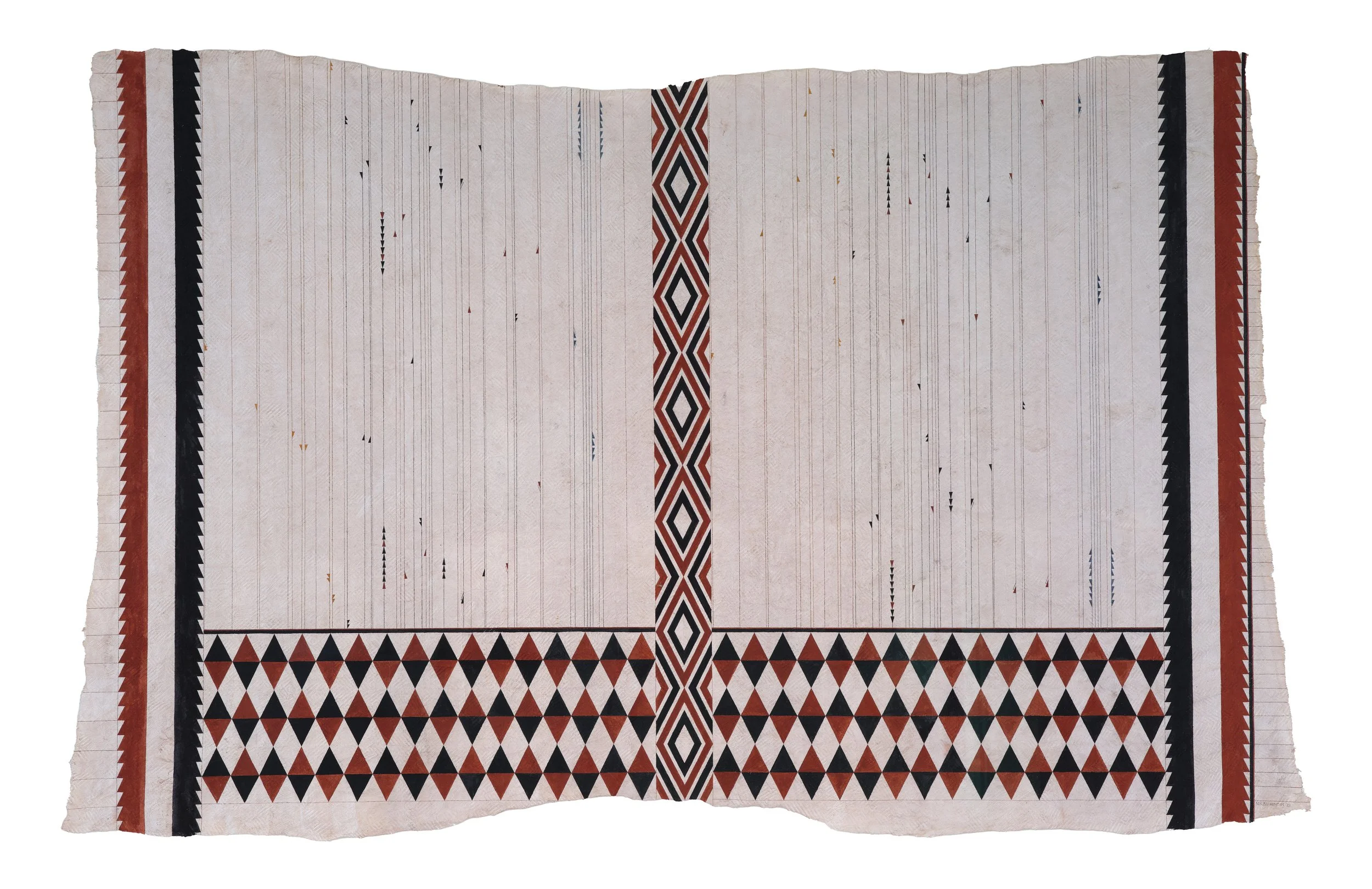
Nikua Hindin
Tātai Arorangi III
2021
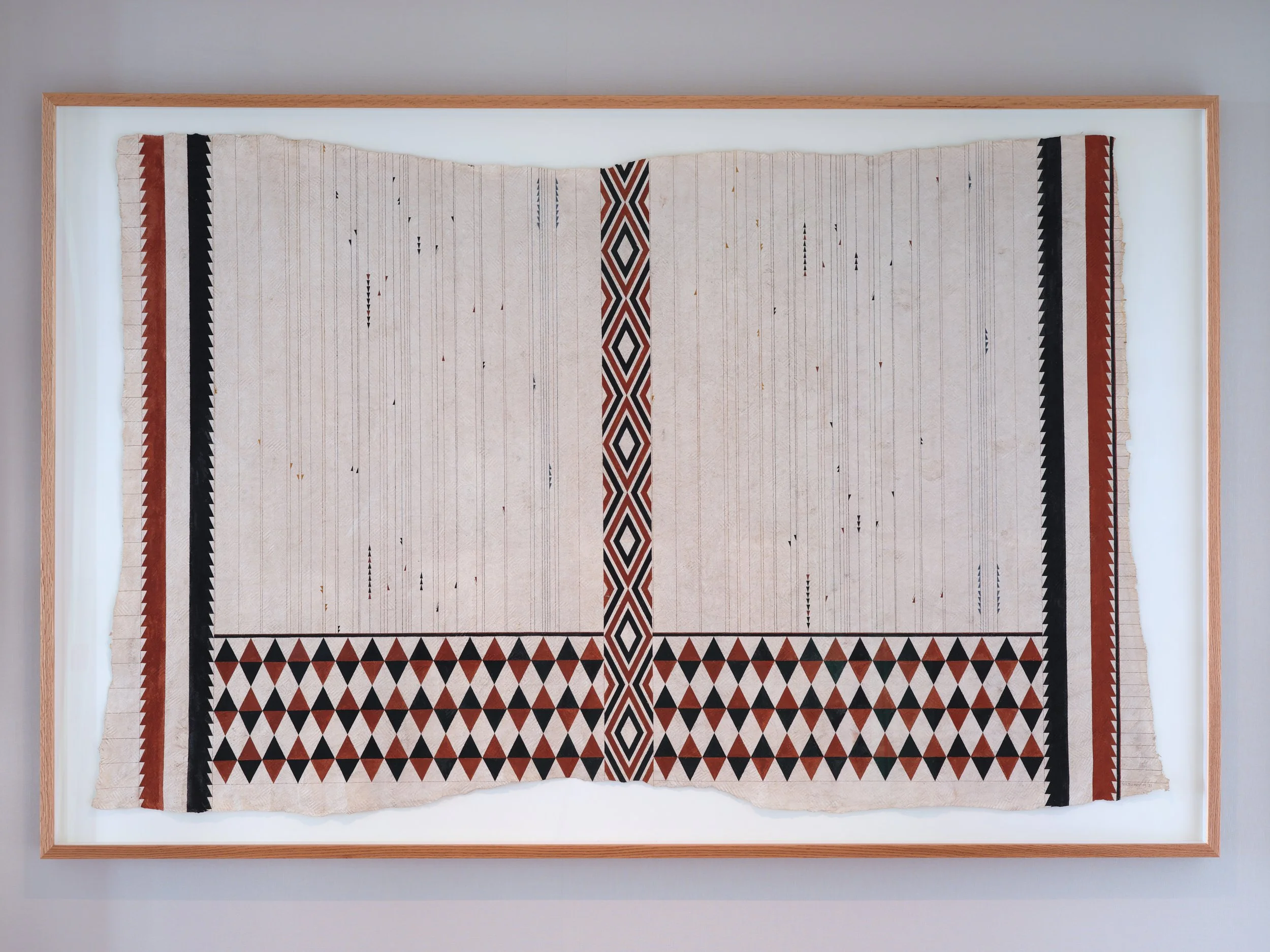
Kōkōwai (red ochre), ngārahu (soot pigment), pukepoto (blue earth pigment) and yellow kōkōwai on aute
Commissioned by Great Eagle for Cordis Auckland
Jasmax, Space Studio
Nikau Hindin (Te Rarawa, Ngāpuhi)
Highly respected artist Nikau Hindin has spent much of the past decade dedicated to reviving and preserving the traditional Māori practice of aute-making in Aotearoa New Zealand. Aute, also known as barkcloth, is prevalent throughout Moana Oceania; it is known as siapo in Sāmoa, hiapo in Niue, kapa in Hawai’i, masiin Fijiand ngatuin Tonga, and was believed to have been lost in Aotearoa since the mid-19th century. The auteplant was brought to Aotearoa along with kūmara, taro and whau, and was worked into cloth for adornment, manu aute and wrapping taonga but receded from use in the 1840s. Hindin’s reawakening of this practice began during her studies in Hawai’i, when she connected with the creation of autein Māori cloth-making traditions. Since that time, she has worked hard to become skilled in the medium, with her work being highly regarded for its strong traditional resonance, as well as its innovative contemporary relevance.
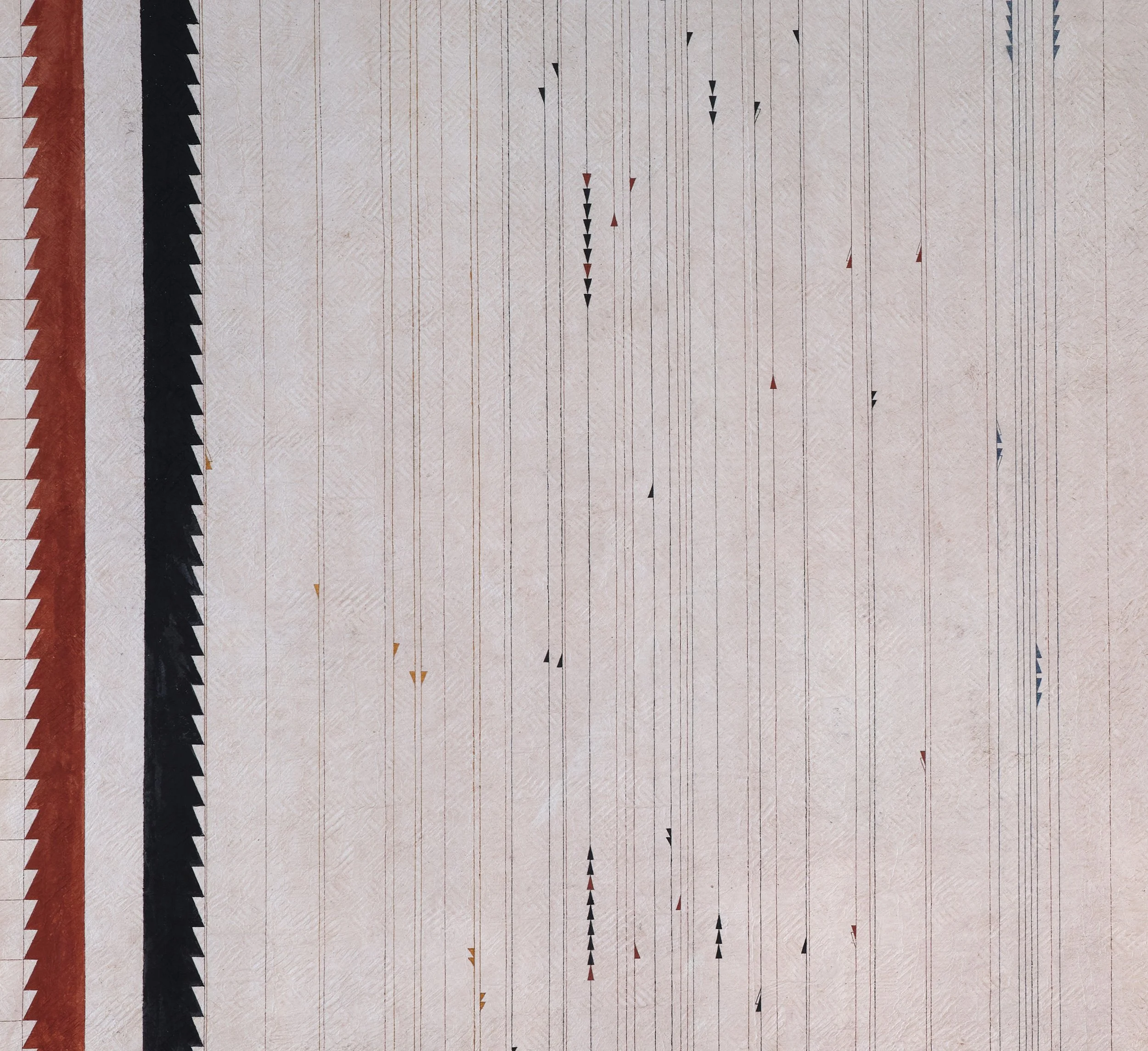
After pounding the bark with her handcrafted aute beaters, Hindin then paints incredibly delicate star charts upon her surfaces. Hindin has created a visual language drawn from tukutuku panels and tāniko designs, seen in Māori meeting houses and framing woven cloaks.
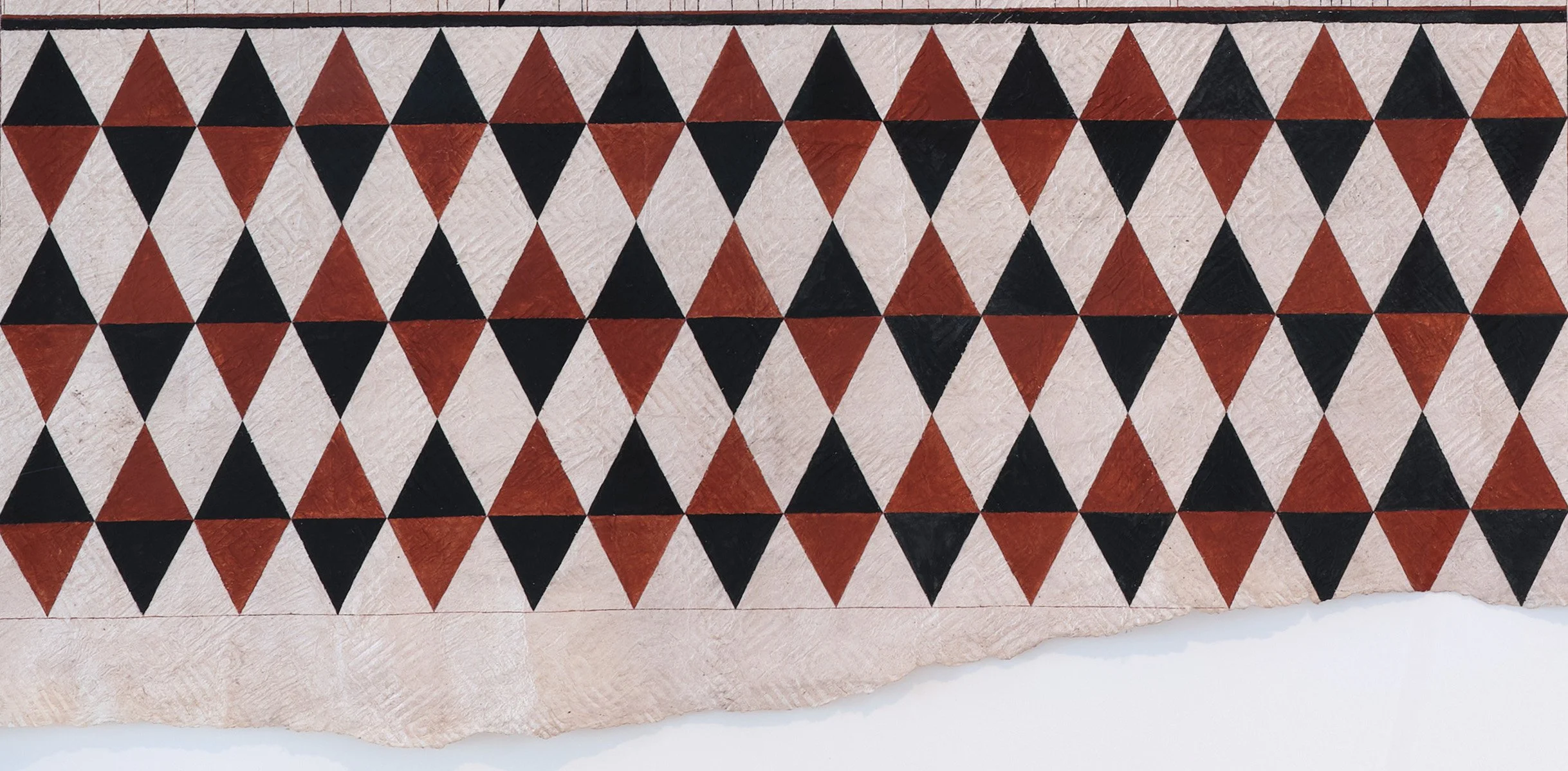
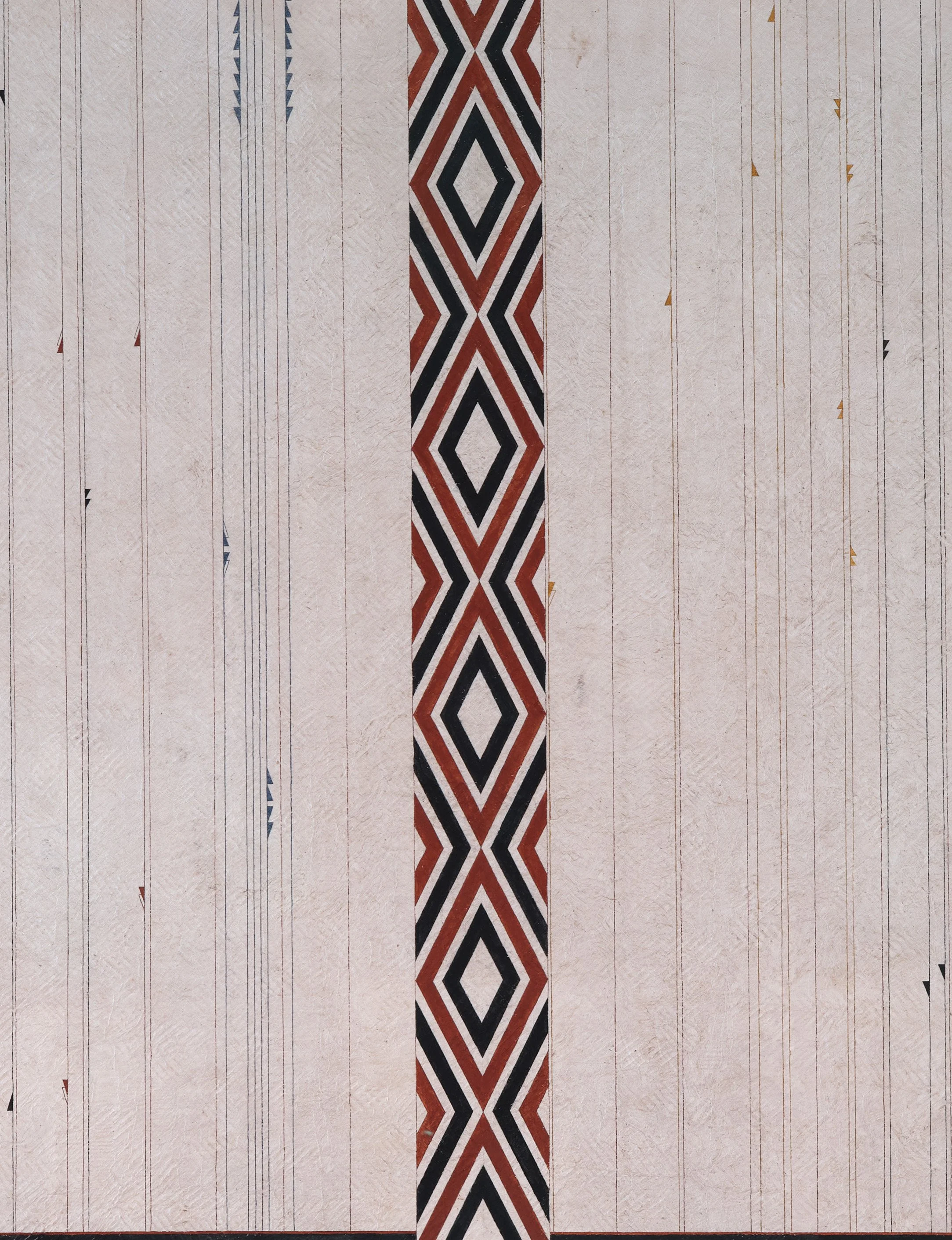
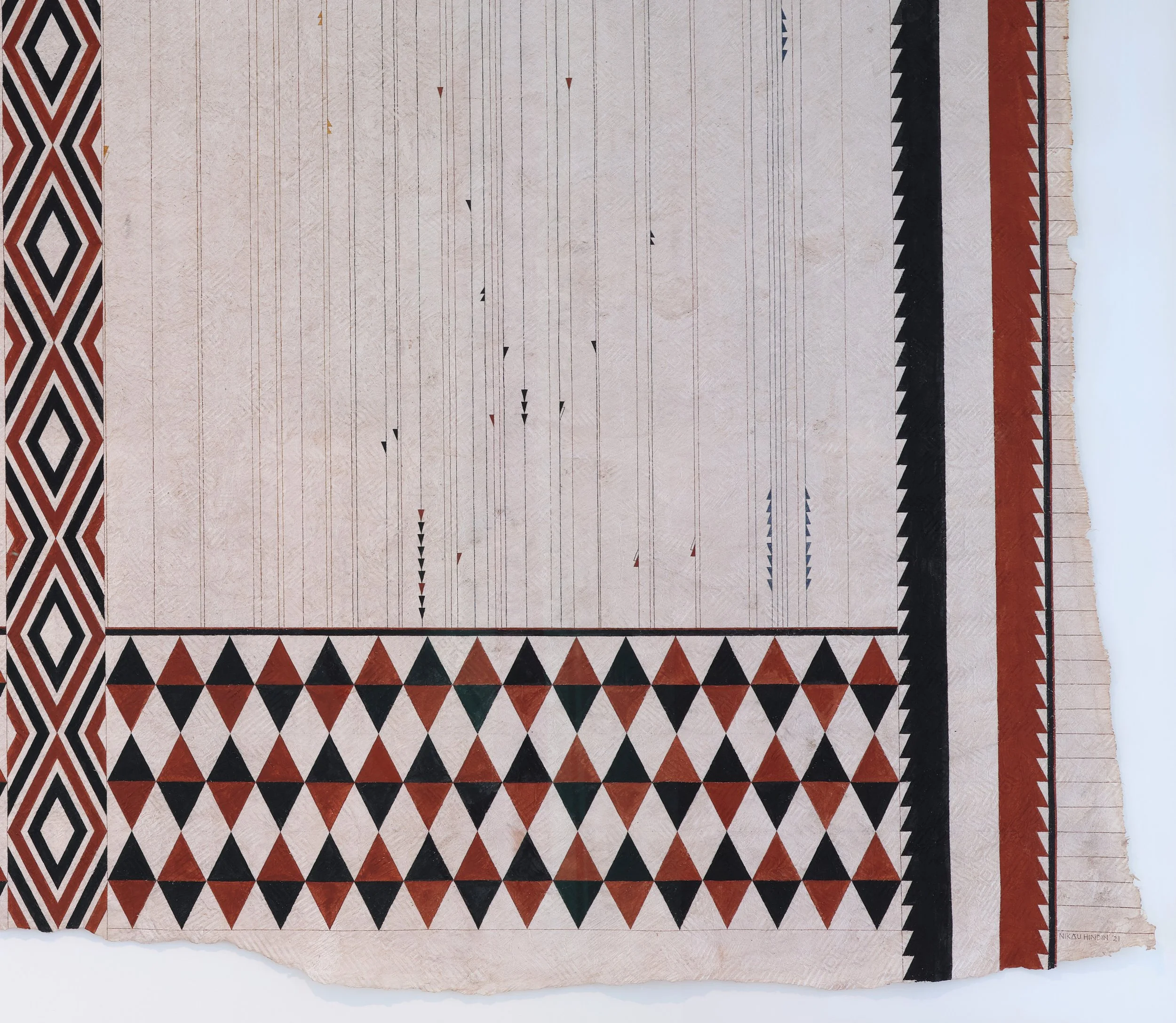
For Cordis Auckland, Hindin has created Arorangi III, which has been made with a unique embossed pattern made with a beater that has this pattern carved on it. Māori and Kanaka Maoli are some of the few cloth-makers who create this watermark texture on the cloth; it makes it finer and stronger.
This piece features all of the 32 star houses as diamond shapes under the horizon line. Hindin conceptualised the central pou as the south celestial pole, ubiquitous in Aotearoa as the Southern Cross circles it. Hindin uses the conceptual framework of the Star Compass – which she learnt from the celestial navigation apprentices of Nainoa Thompson whilst she was studying in Hawai’i – whereby she records the places where stars rise along the horizon. Each vertical line represents a star’s declination. The triangles on these lines represent the times they rise or set, allowing the relationships between the constellations to be seen. Hindin depicts different stars in accordance with the shapes, appearances and stories of each. For example, Matariki or Pleiades has nine triangles which correspond to the nine stars of this constellation. The colour and shape of each star also relate to its significance or its relationship to other stars; some are sisters, chiefs or lovers.
In this piece, the northernmost stars (which we cannot see here) are rendered in yellow pigment from Ōhiwa and the southern stars are depicted in pukepoto, a rare blue pigment from Te Waipounamu. As Māori travelled north or south, new stars appeared on the horizon, helping the navigator to calculate latitude. Articulating these star maps connects the maker with her ancestors, who used the star compass to navigate as they voyaged across the largest body of water on this planet.
For Hindin, kaitiakitanga is a central notion, whereby her harvesting techniques and material choices are sustainable, striving for a reciprocal balance between humans and the land. This synergy between place and self is elegantly expressed through her refined use of natural materials: the aute bark, which is also known as te kiri o Tāne, the skin of Tāne (the Māori god of the forest); and the earth pigments or kōkōwai, which are the menstrual soils and veins of Papatūānuku – the earth mother of Māori mythology. With each work, Hindin is connecting the present moment with the founding stories of Aotearoa.
As Hindin states: “This makes me realise how important the relationships that are formed in the creative process are. The stories that are told and the knowledge that is passed forward – all of this is woven (or beaten) into the fibres of my cloth.” Hindin’s remarkable aute works become part of an ever-expanding network of knowledge that runs from deep space, through to the natural cycles of nature and story.
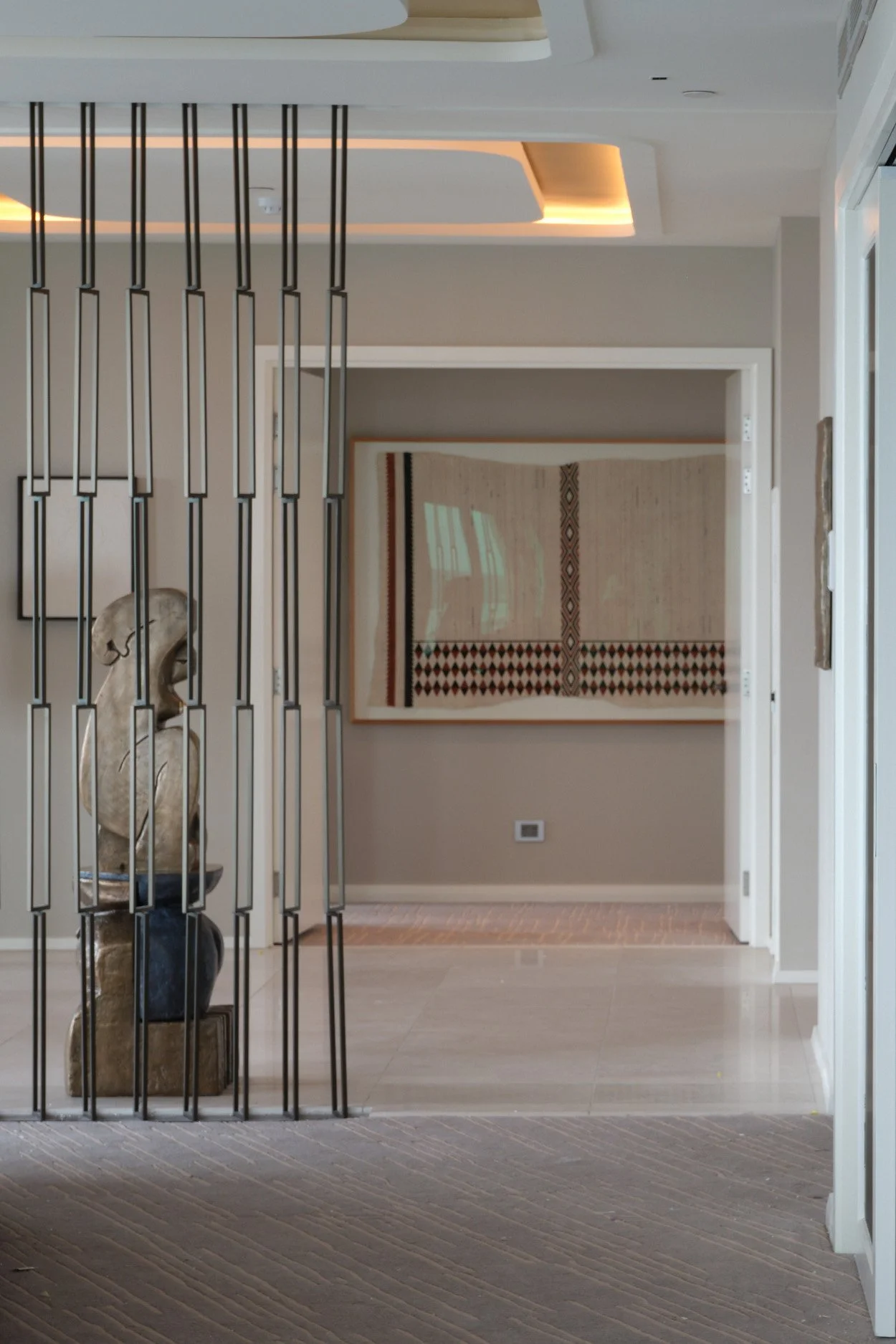
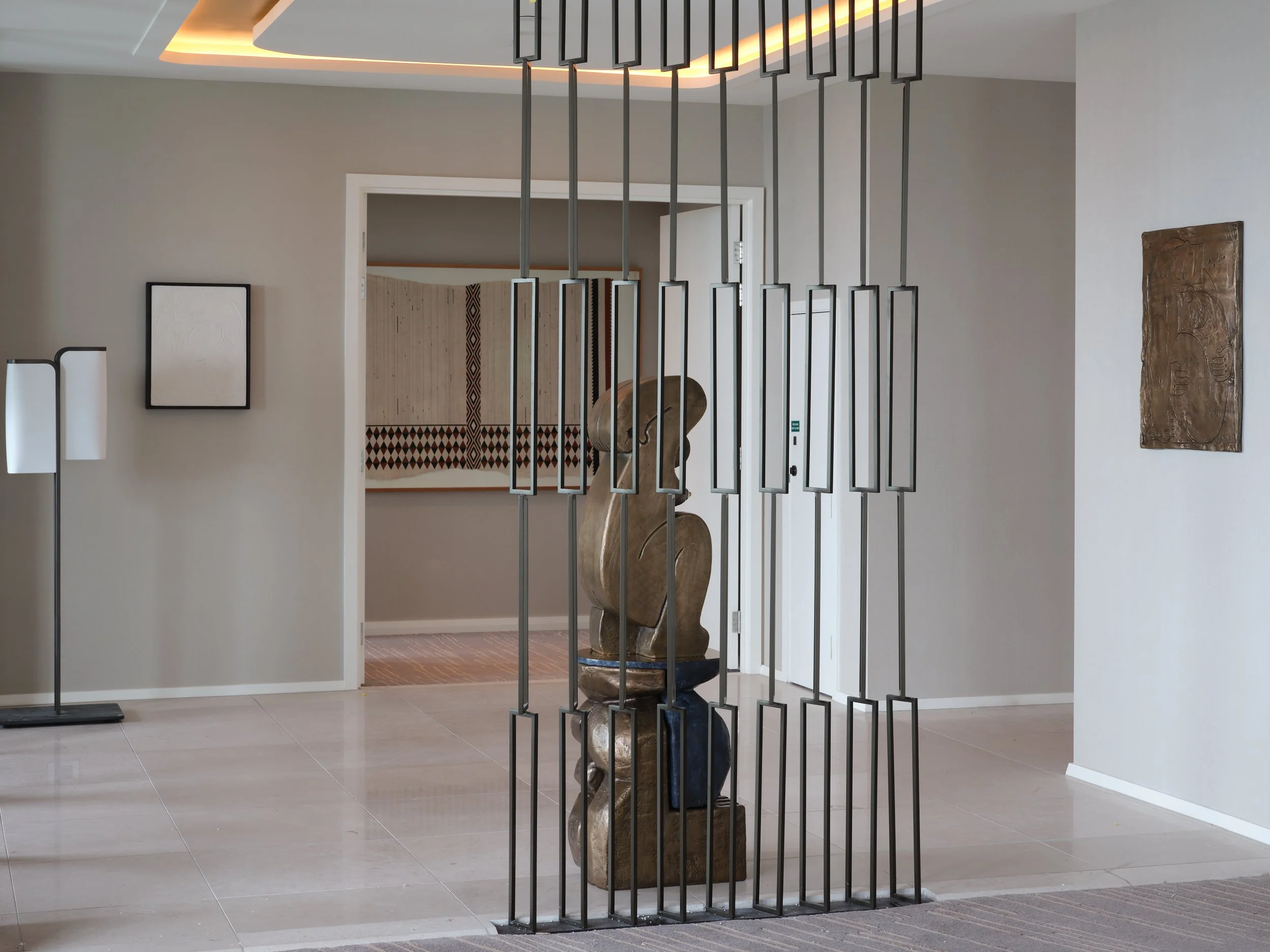
Nikau Hindin has created a new work for Cordis Auckland, which is located in the Chairman’s Suite.
Photography: Sam Hartnett. Images courtesy of the artist.